
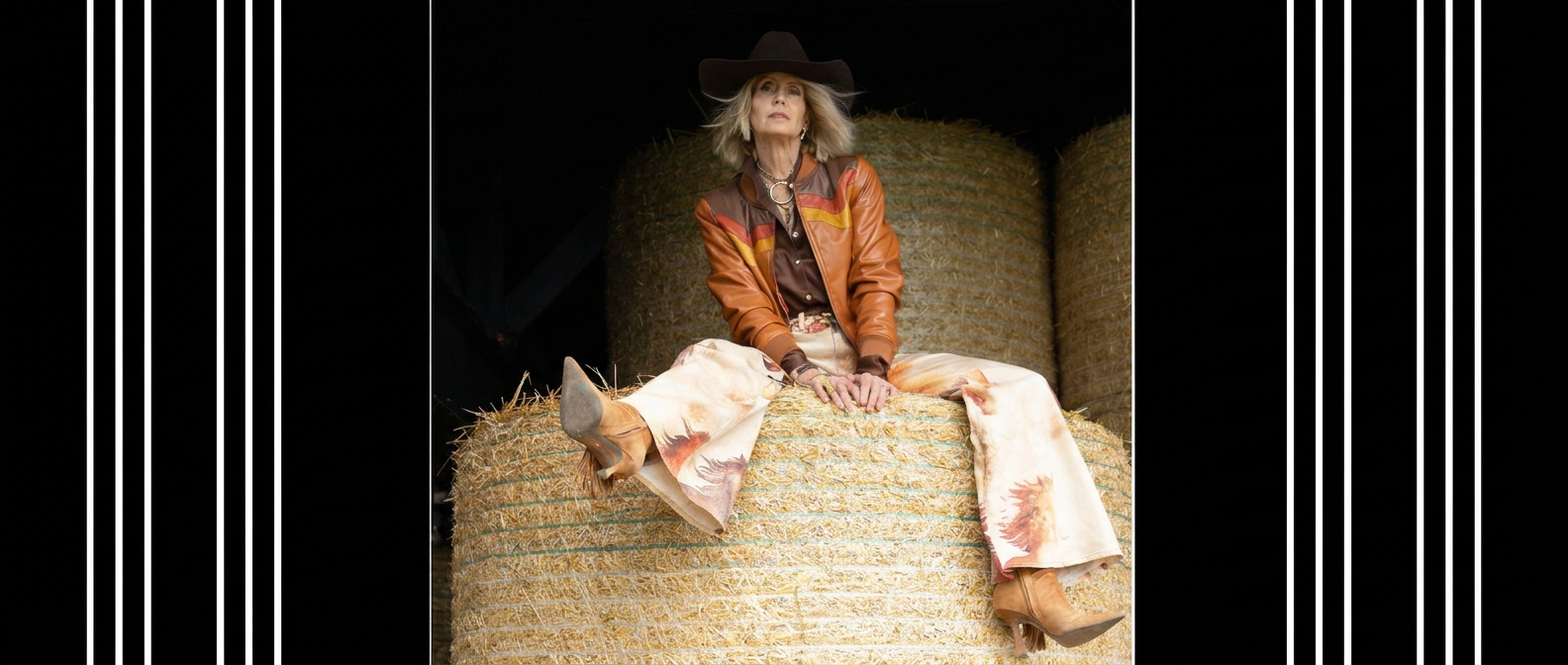
On grief, reinvention, and what becomes possible when you stop performing your own life.
Some stories don't begin with a breakthrough. They begin with a collapse. For Jane Stewart, the reckoning came after two decades in corporate sales, a career built on performance, on showing up, on being exactly what the room needed. What it didn't leave room for was her. The childhood trauma she'd never addressed. The grief she'd learned to outpace. The depression that eventually made the mathematics simple: change, or disappear. What followed wasn't a wellness arc. It wasn't a rebrand. It was the considerably harder work of therapy, of truth-telling, of learning at an age when most women have been told the interesting part is over, that the self she'd been deferring had been waiting patiently the whole time. She found her way back through fashion. Through storytelling. Through showing up on camera and saying the real thing, without softening it for the algorithm or the audience. Women found her. Recognised something. Stayed. At sixty-one, Jane Stewart is doing the most radical thing available to a woman in 2026: existing fully, publicly, and entirely on her own terms. No permission sought. None required.
You built twenty years of success in corporate sales and privately, something was fracturing underneath it. When did you first understand the distance between what you were performing and what was actually true?
I never set out to make my healing public. I simply reached a point where I could not keep pretending.
About four and a half years ago, both of my parents passed away. Around the same time, I was navigating the aftermath of childhood trauma that I had spent decades trying to outrun. Therapy became one of the most difficult and important commitments of my life.
What surprised me was what happened when I started telling the truth.
Women began reaching out. Not because I had answers, but because I was willing to say the things many of us carry quietly. The grief, the depression, the shame, the loneliness, and the work of rebuilding.
What I learned is that vulnerability does not create weakness. It creates connection.
The more honest I became, the more I found the women I was meant to reach. Not because my story is unique, but because it is not. There are countless women carrying stories they believe they have to carry alone.
Therapy, grief, depression, and childhood trauma are words women are still conditioned to keep quiet about, especially in professional contexts. What made you decide that your healing was going to be public, and what happened when it was?
People often assume fashion is about attention. For me, it became about worthiness.
For years, I dressed appropriately, professionally, and practically. I dressed in ways that made everyone comfortable.
Today, the way I dress is a declaration.
The boots, the hats, the vintage pieces, and the bold styling are not costumes. They are evidence that I stopped shrinking. Every outfit is a reminder that I am allowed to take up space.
When I say fashion helped me reclaim myself, I do not mean clothing fixed anything. Therapy did the heavy lifting. The healing did the heavy lifting.
Fashion became the outward expression of an inward decision. I matter.
Women tell me all the time that they are saving the good outfit for later. The truth is, later is not guaranteed. Wear the outfit. Take the photo. Show up in the world as the woman you already are
Fashion is an unexpected through-line in a survival story. And yet for you it became the language of something much larger than style. What does it actually mean to dress as an act of reclamation?
I found freedom.
What I discovered is that age is not the limitation we have been taught to believe it is. The real limitation is permission. We spend decades waiting for someone to tell us we are allowed to begin.
At sixty-one, I stopped waiting.
What I found was a community of women who were hungry for representation. Women who wanted to see someone building, learning, failing, evolving, and doing it in real time.
If I could say one thing to the woman who believes her best years are behind her, it would be this.
Nothing changes until you move.
Not when you research more. Not when you feel ready. Not when you become fearless.
Action creates clarity.
The meaningful part of your life is not behind you. It is waiting on the other side of the thing you are currently afraid to do.
You arrived at your platform at sixty-one. The culture would have told you that was too late, too niche, too specific. What did you find when you got there, and what do you most want to say to the woman who is standing exactly where you were standing, convinced the meaningful part is behind her?
At 61, I found something I wasn’t expecting.
I found that the meaningful part wasn’t behind me. It was waiting for me.
For years, I believed many of the things women are taught to believe. That there was a timeline. That opportunities belonged to younger women. That eventually you became invisible. What I discovered when I started showing up online, speaking my truth, taking risks, and building something from nothing was that none of that was true.
What people respond to is not your age. They respond to your authenticity, your courage, your experience, and your willingness to be seen.
The greatest surprise wasn’t that other women found me. It was then that I finally found myself.
To the woman standing where I once stood, convinced the best years are behind her, I would tell her this:
You are not too old. You are not too late. You are not disqualified because your life didn’t unfold the way you planned.
Everything you have lived through has given you something valuable. The grief, the failures, the mistakes, the resilience, the wisdom. None of it was wasted.
The question is not whether there is still time.
The question is whether you are willing to stop waiting for permission and begin.
Because the moment you do, you may discover what I did:
The most meaningful chapter of your life hasn’t happened yet. It begins the day you decide to believe there is still more for you.
Unbroken, an evening of art, story, and strength, is a gathering, but it feels like something more than an event. What are you actually trying to create in that room?
Actually trying to create in that room?
I am trying to create the room I need.
Unbroken is not about perfection. It is not about having a polished story or a beautiful ending.
It is about what remains after life breaks your heart.
The event features artwork inspired by my journey, but the evening is not really about me. It is about every woman who has survived something. Grief, trauma, illness, divorce, reinvention, loss, and the moments that change us.
I want people to walk into that room and feel less alone.
I want them to see strength differently, not as toughness, but as the willingness to keep going.
I do not want people leaving inspired for an hour. I want them to leave with permission to take the next step in their own life. Whether that is making a phone call, starting therapy, setting a boundary, pursuing a dream, or simply believing they are worthy of more.
The name Unbroken does not mean untouched by hardship. It means life happened, and you are still here.
To me, that is one of the most powerful things a person can say.